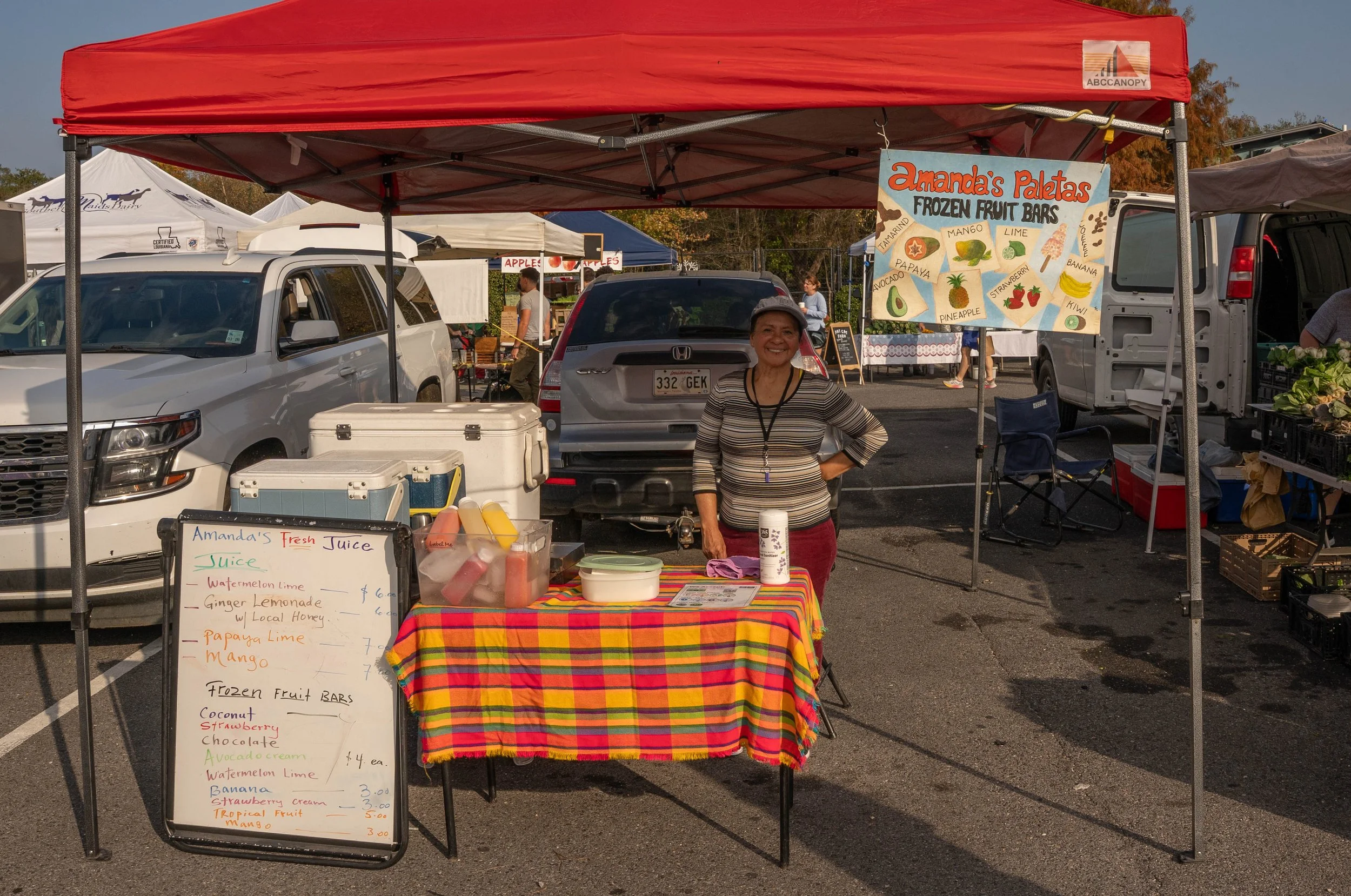
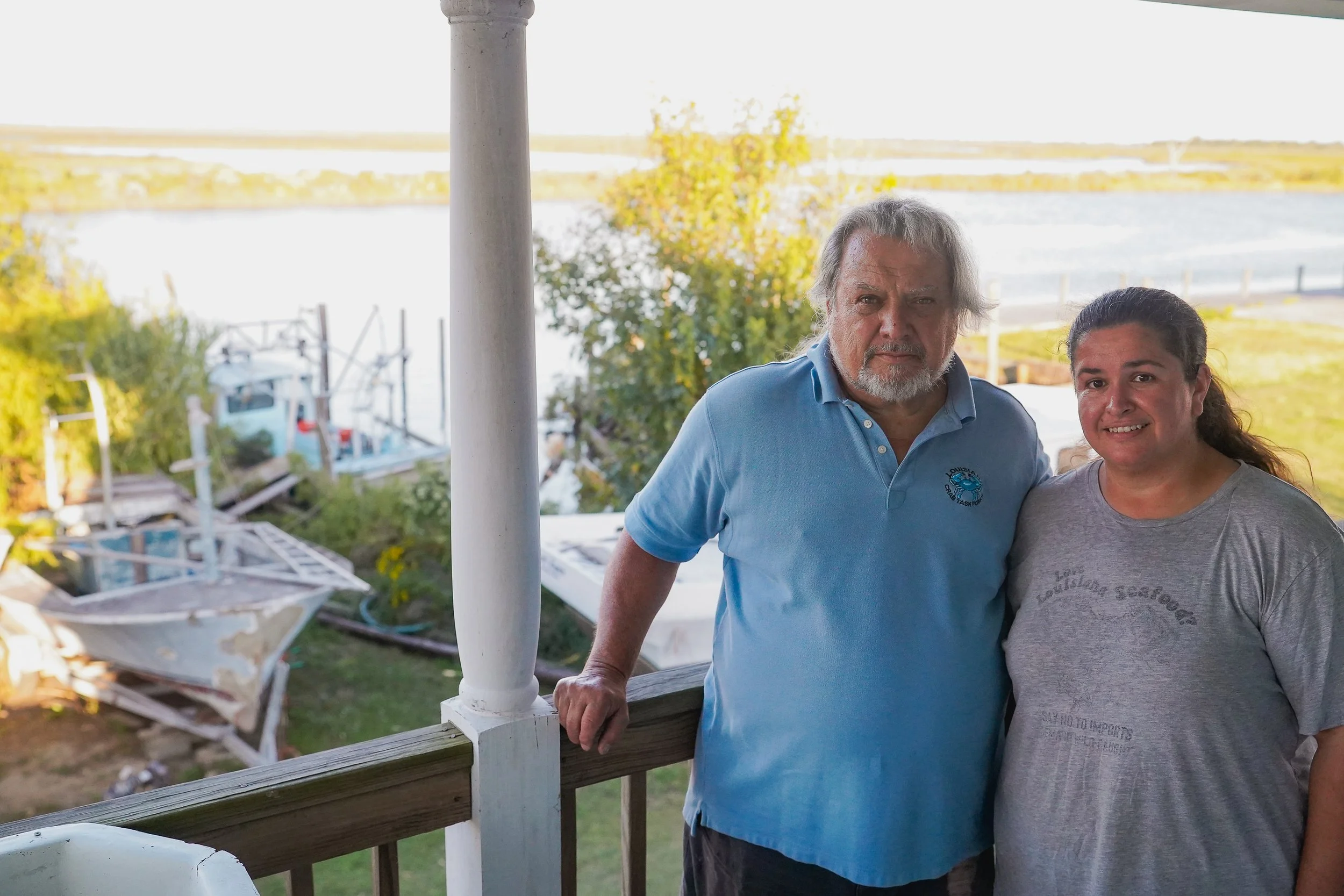
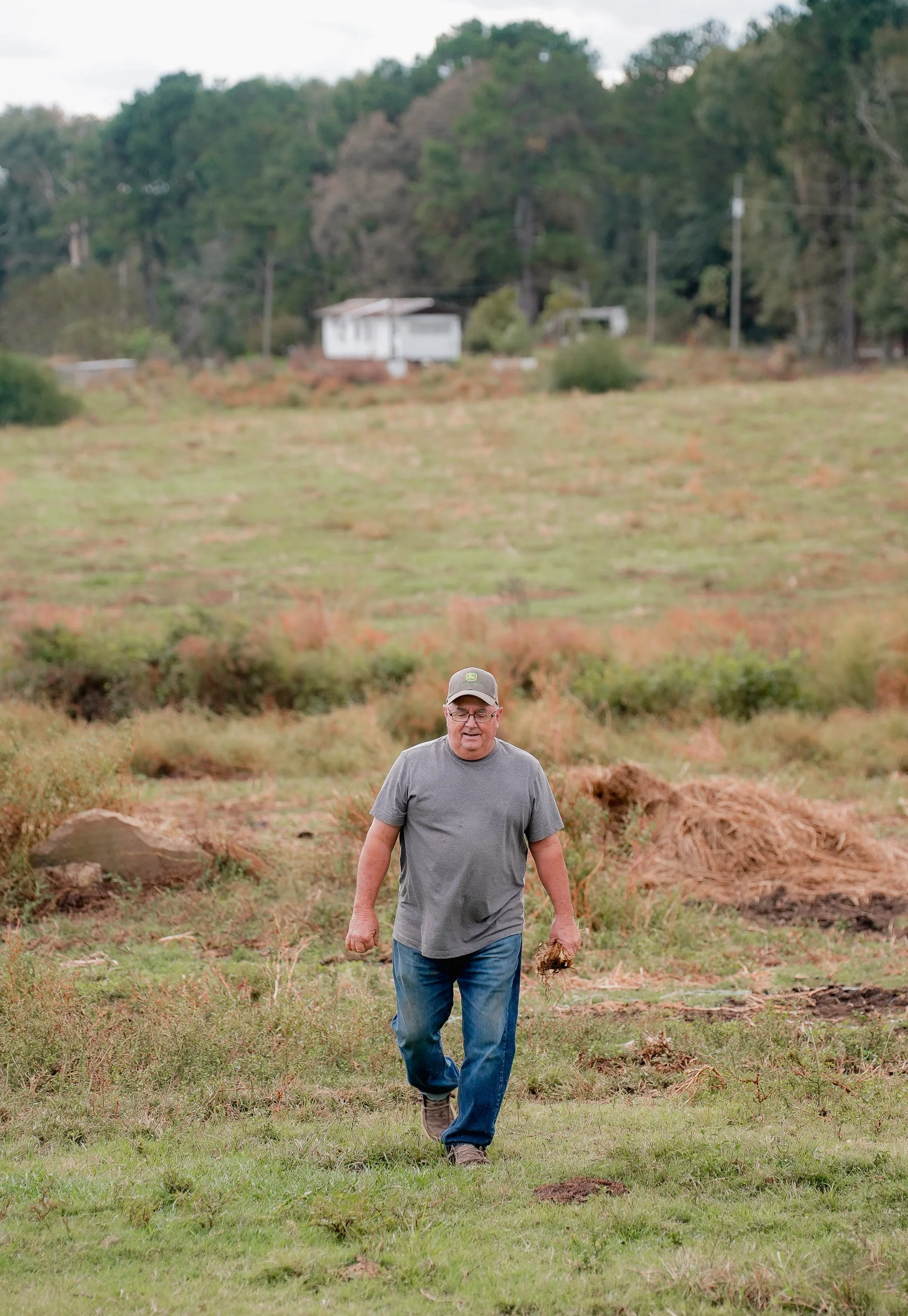
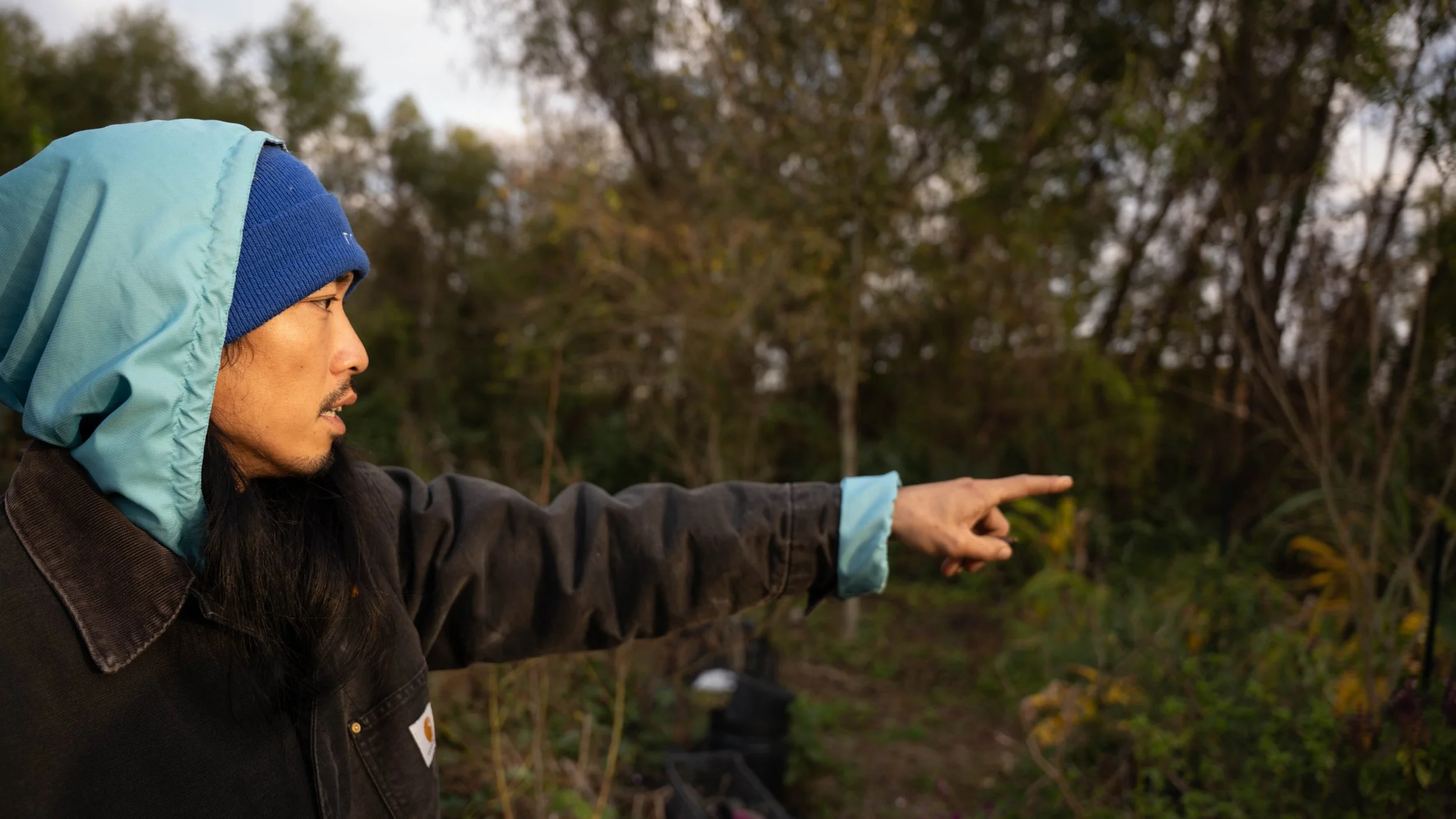
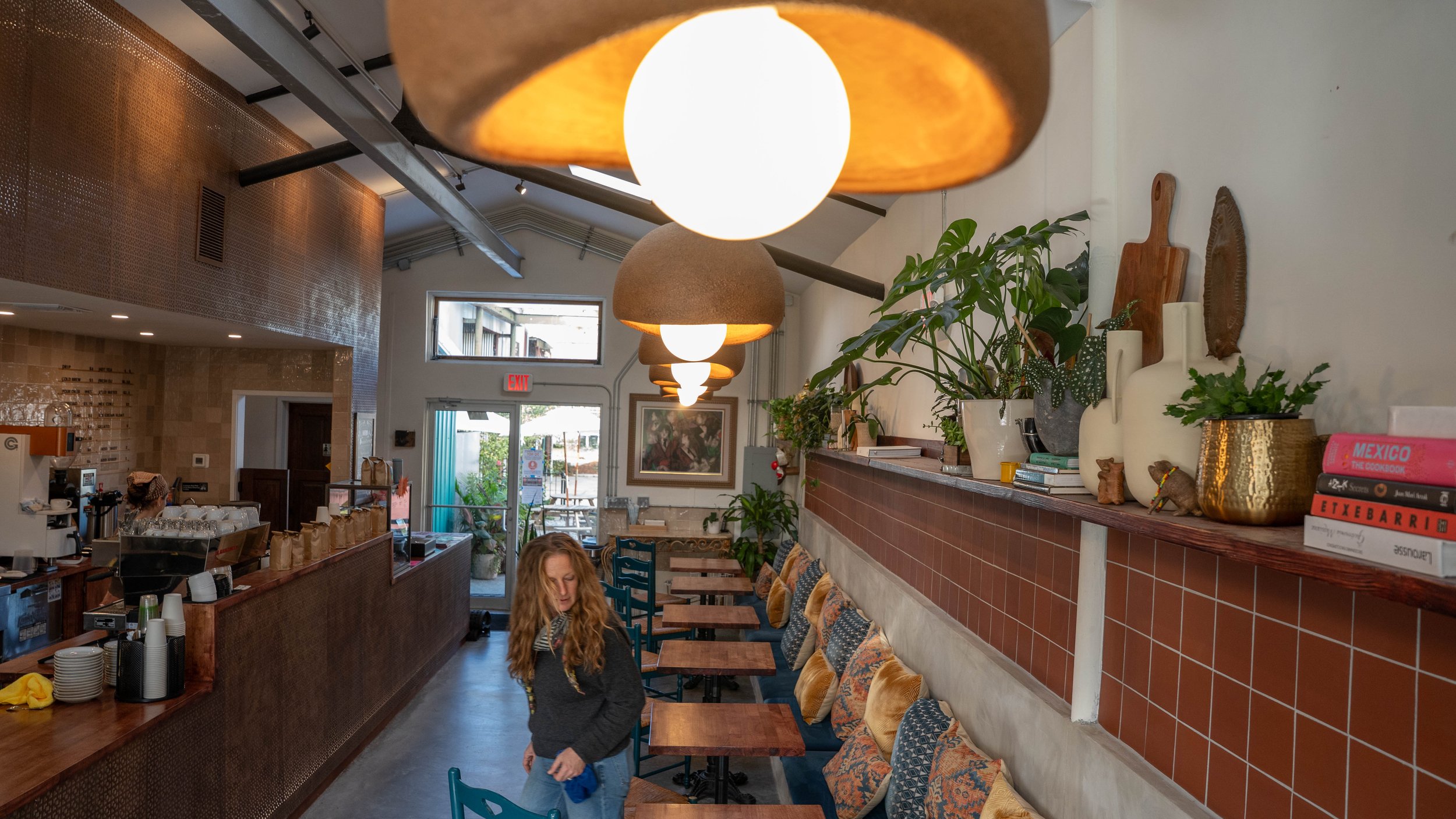
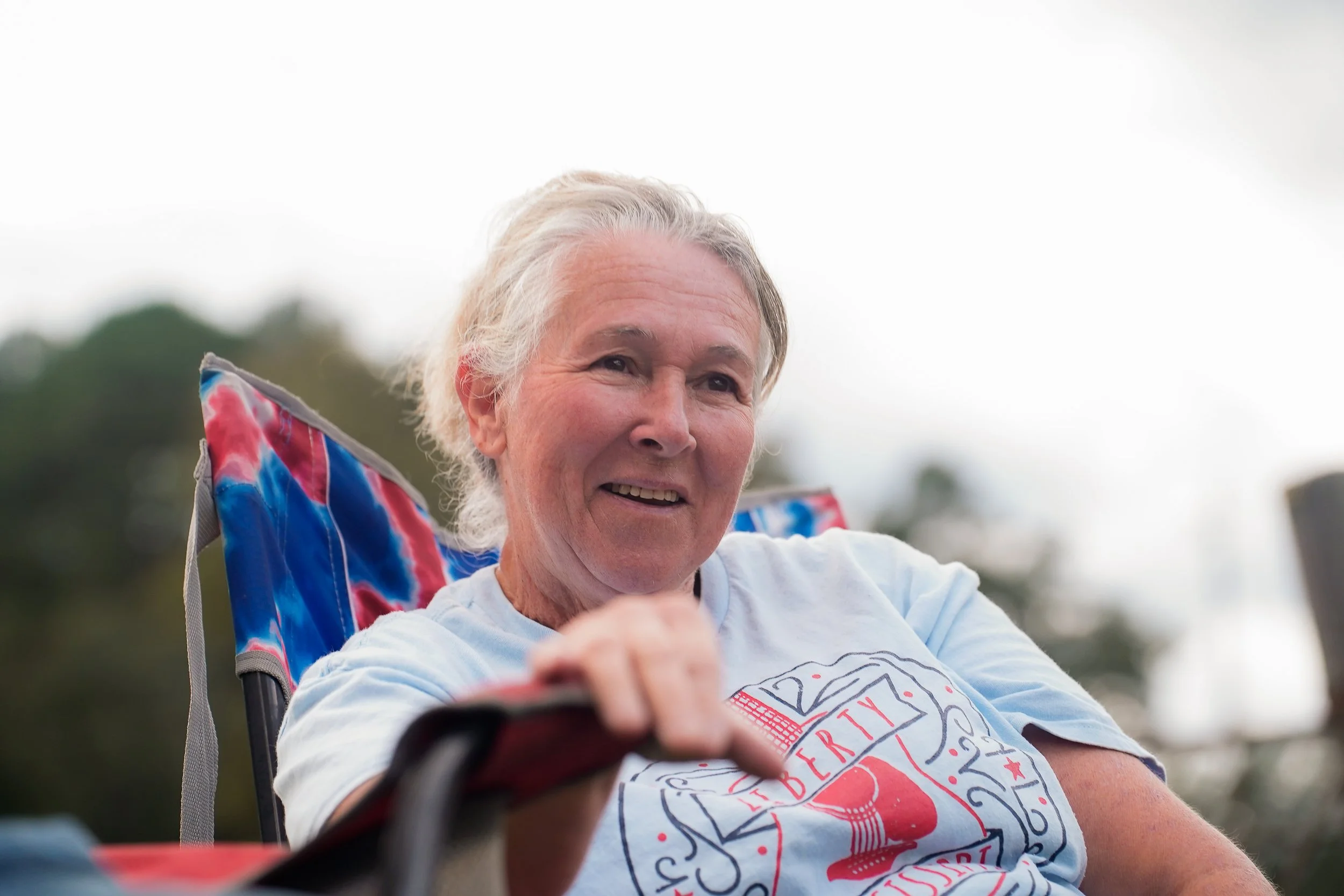
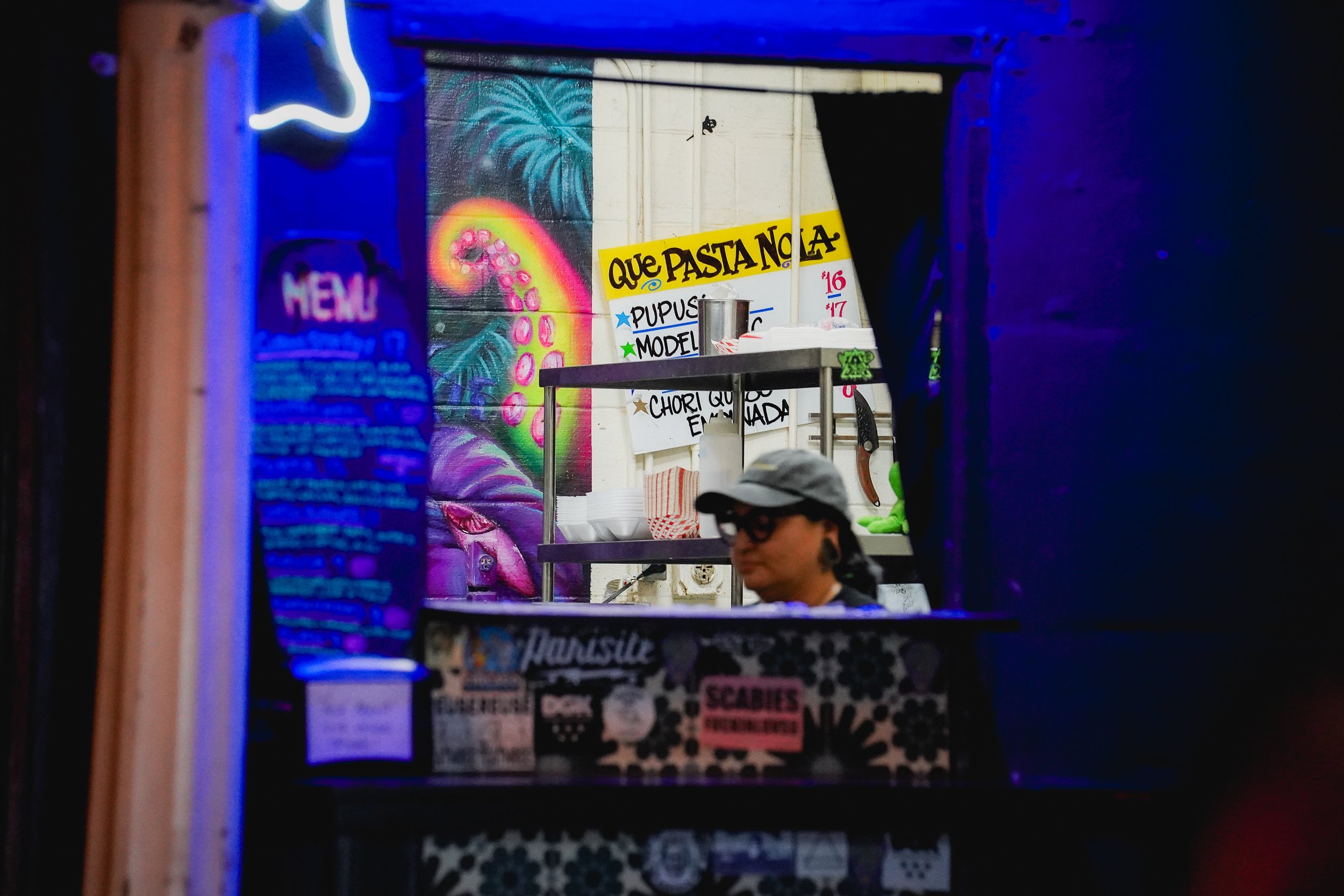
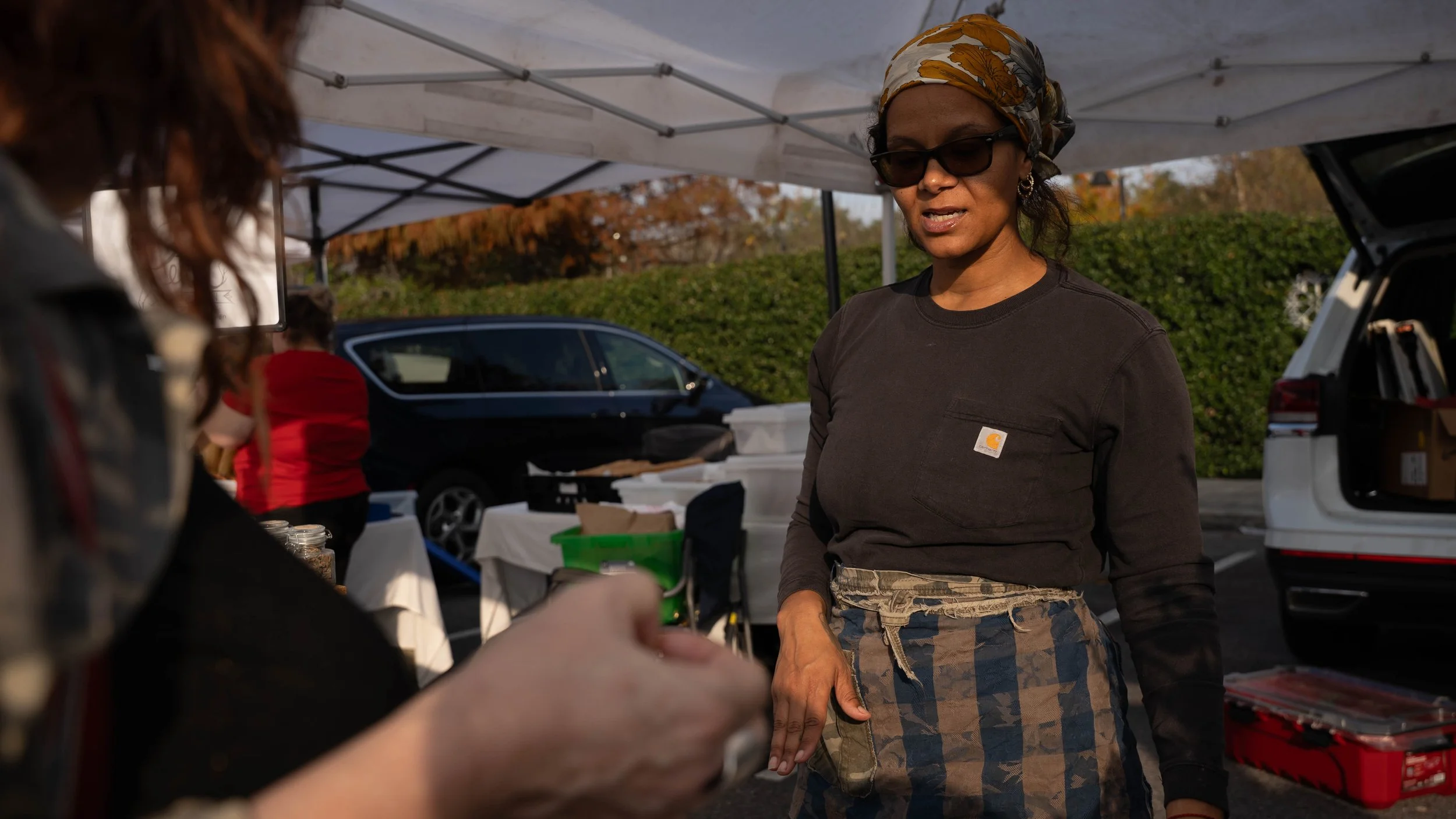
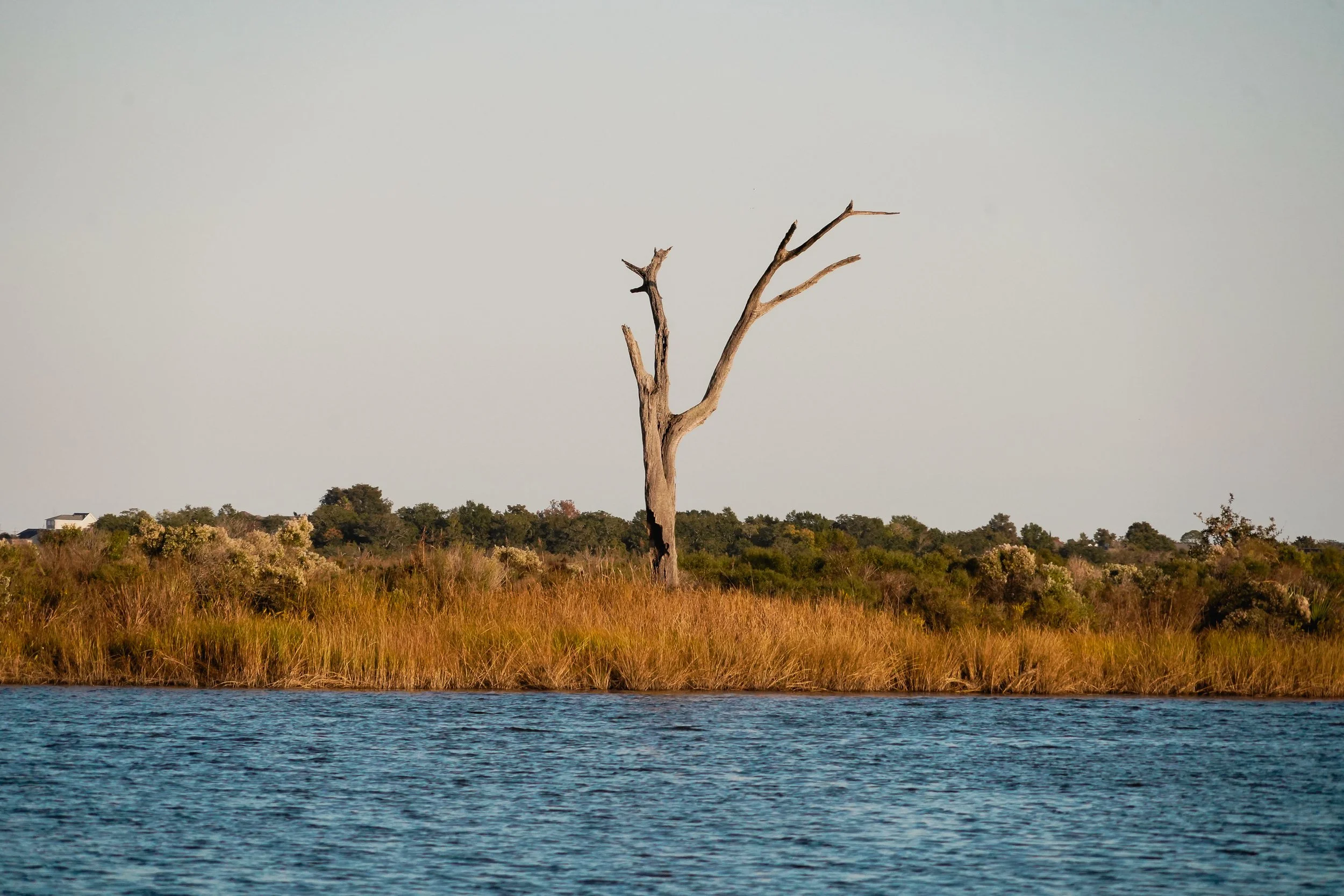
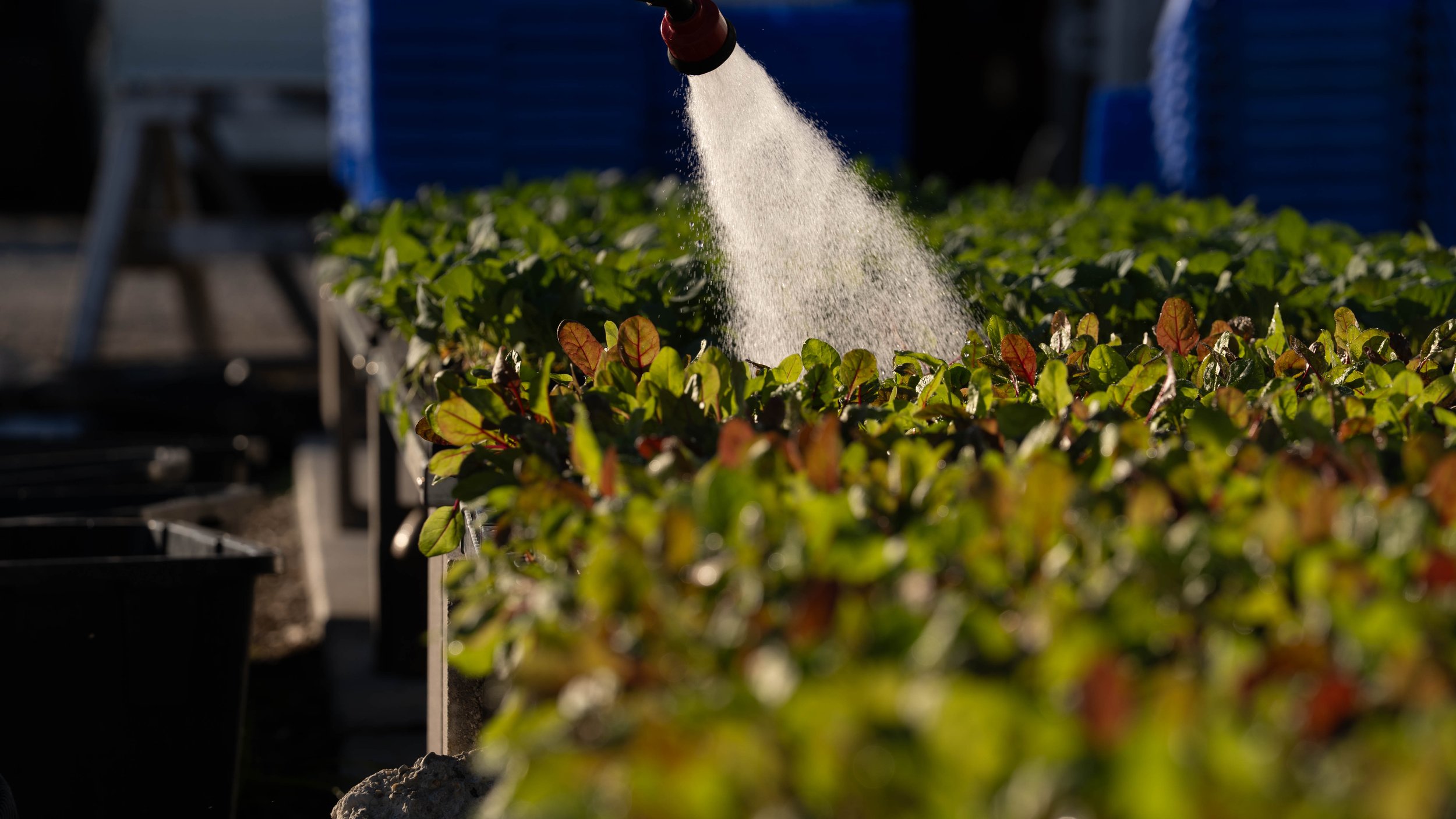
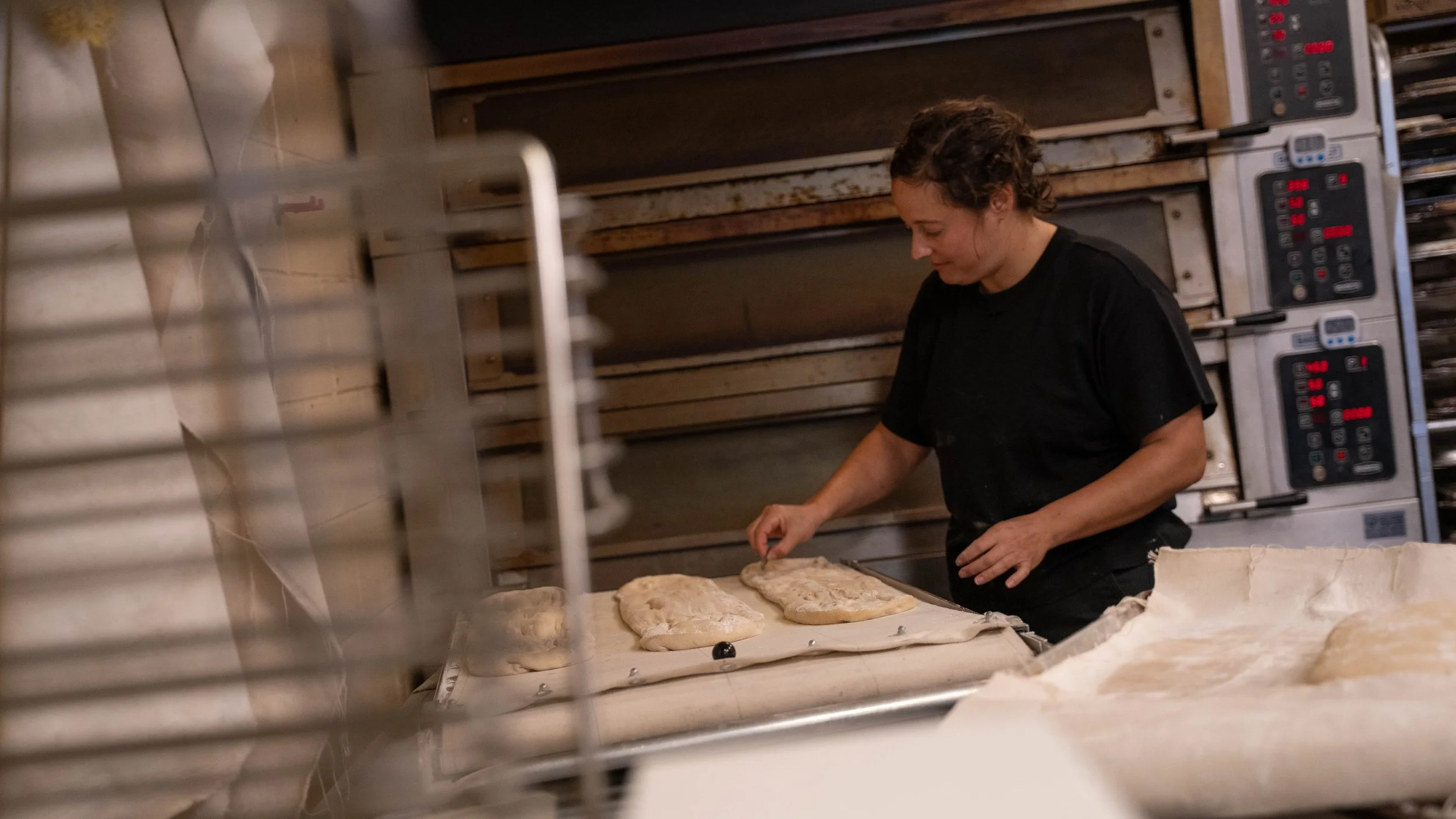
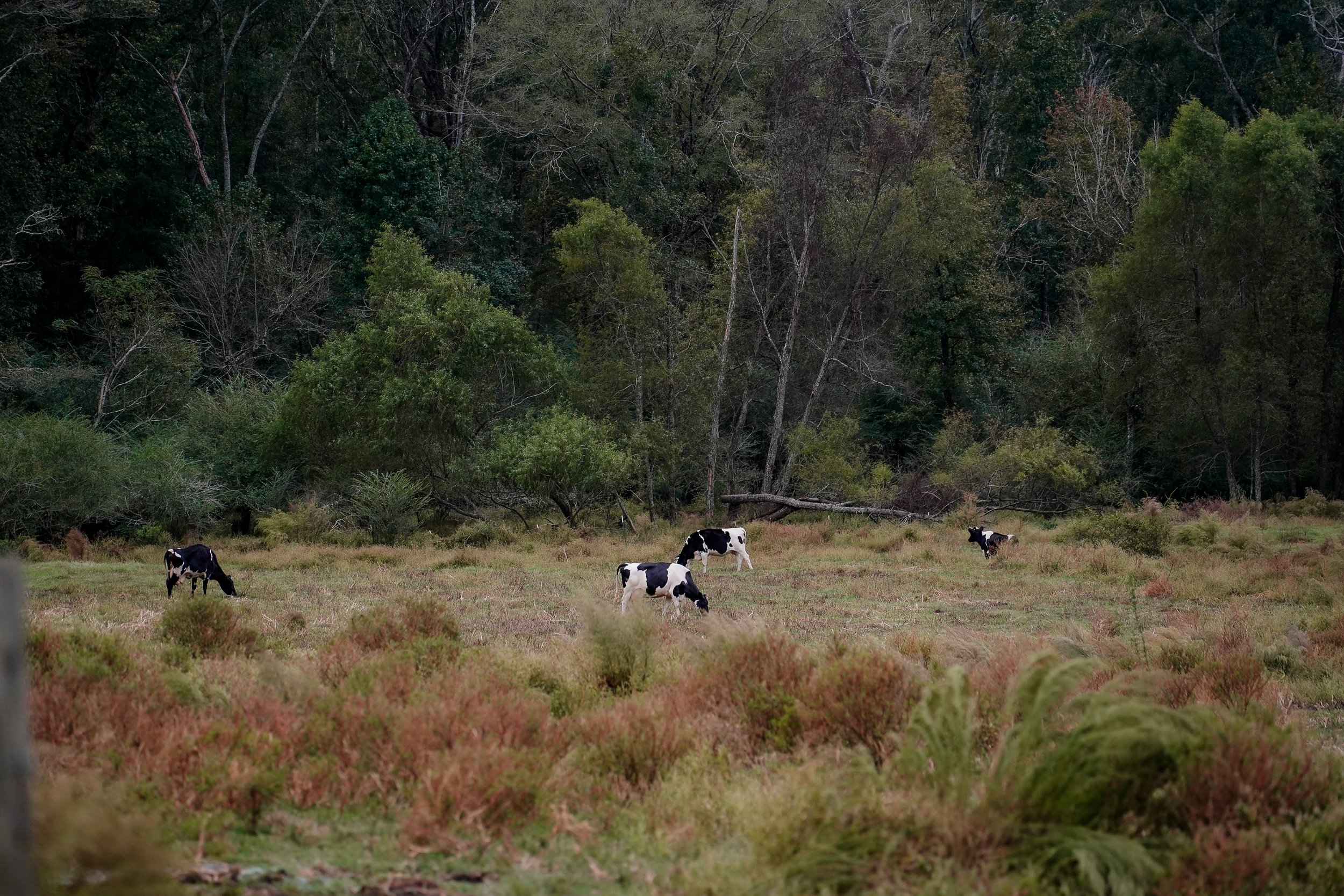
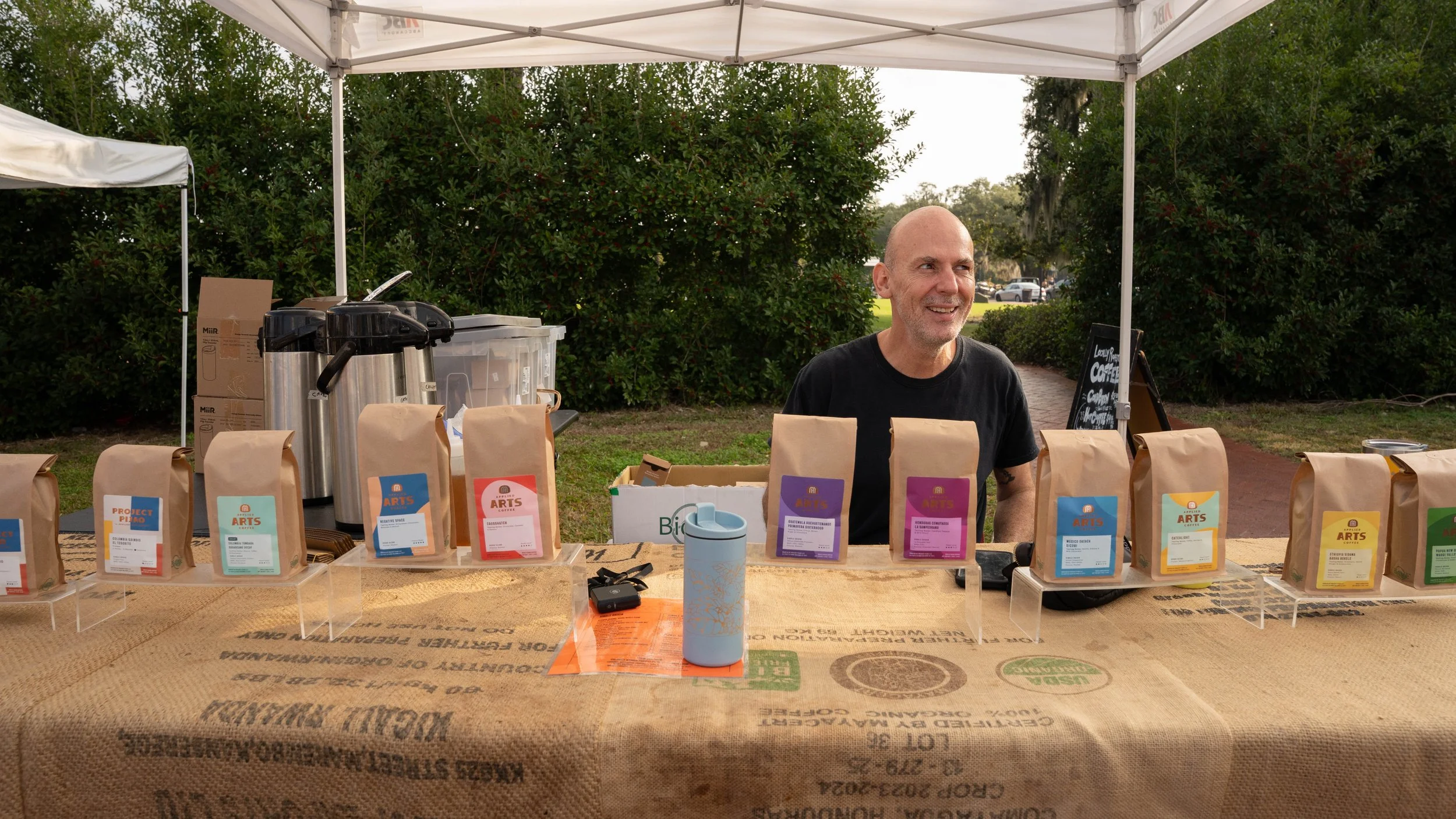
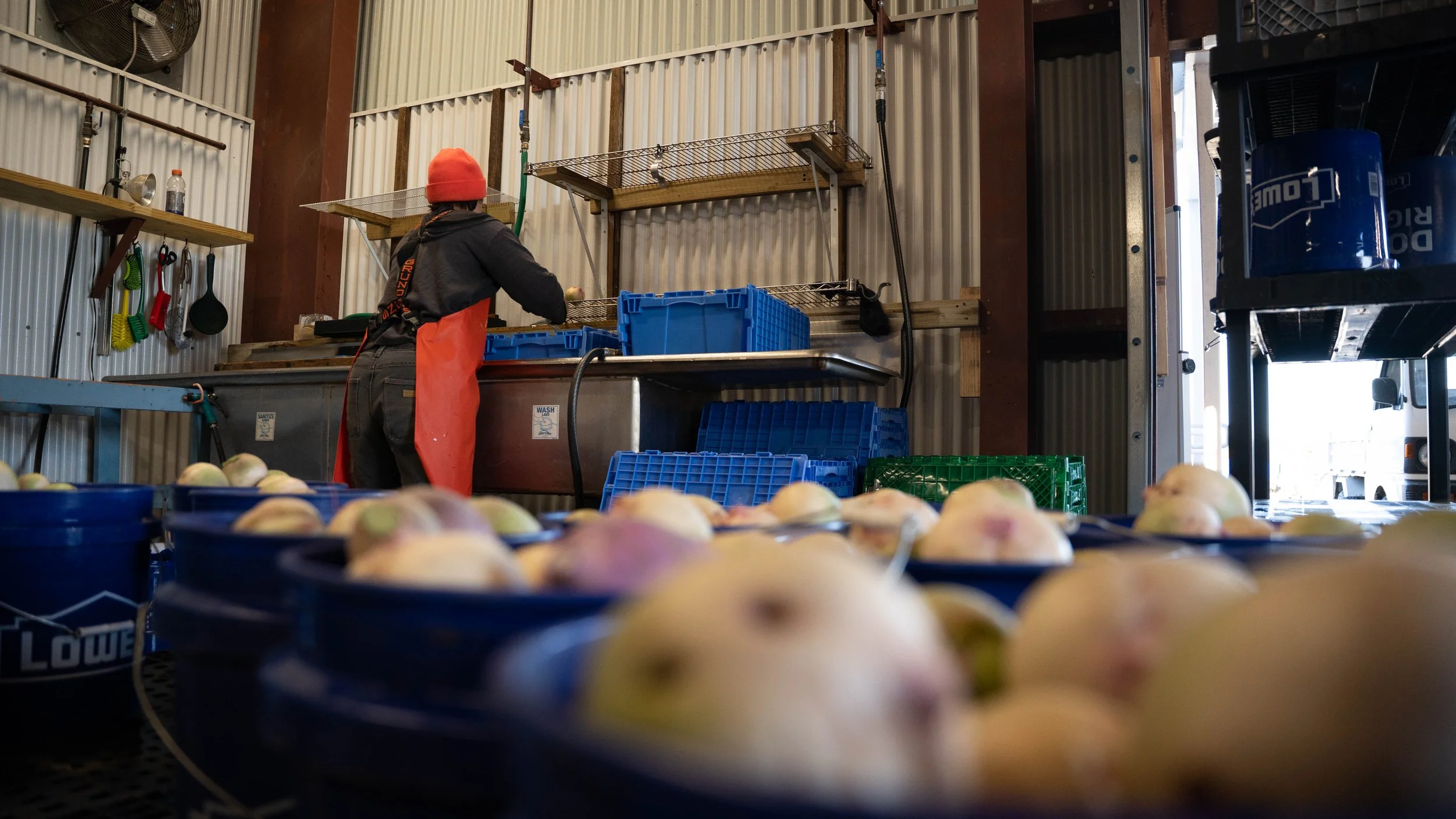
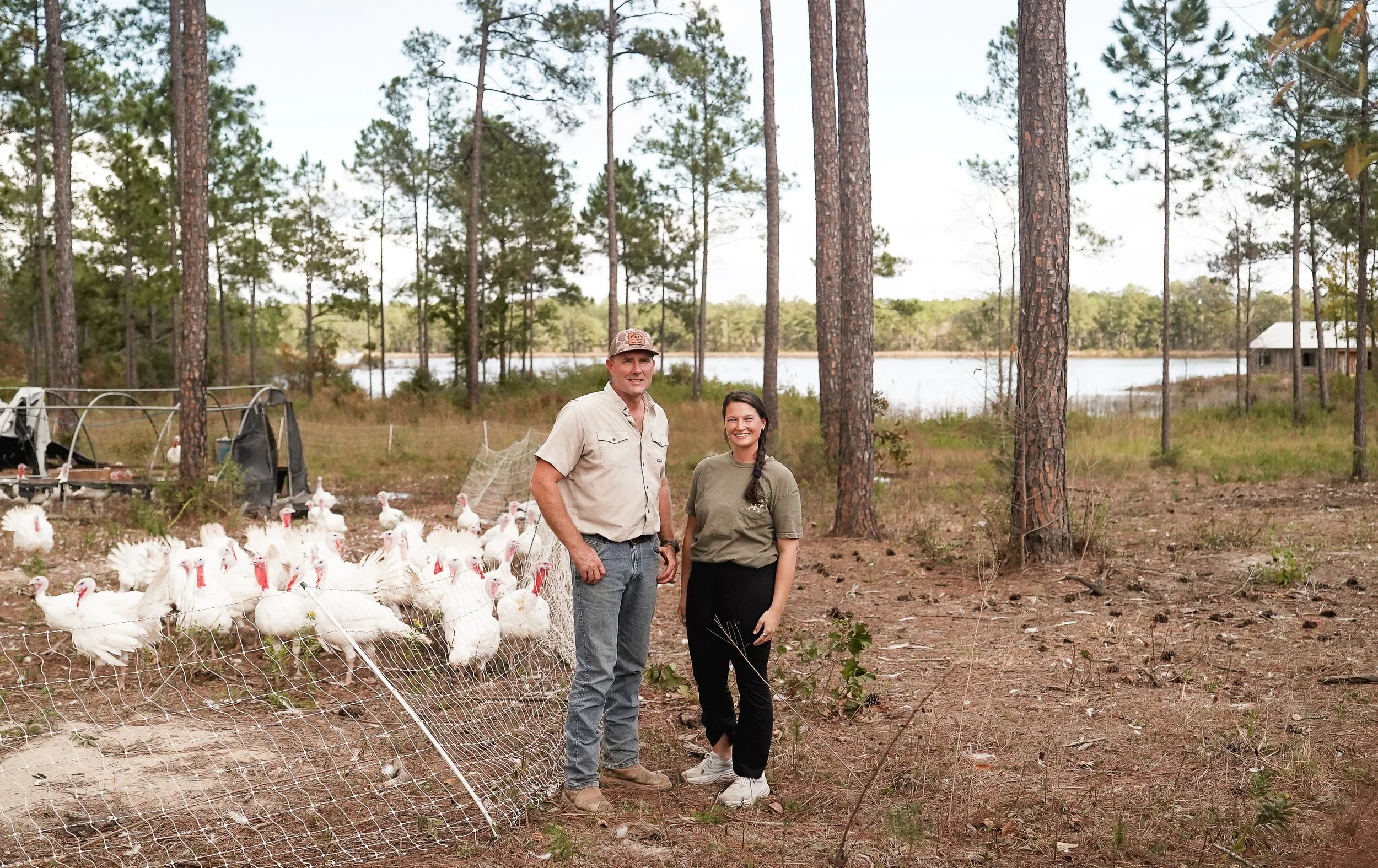
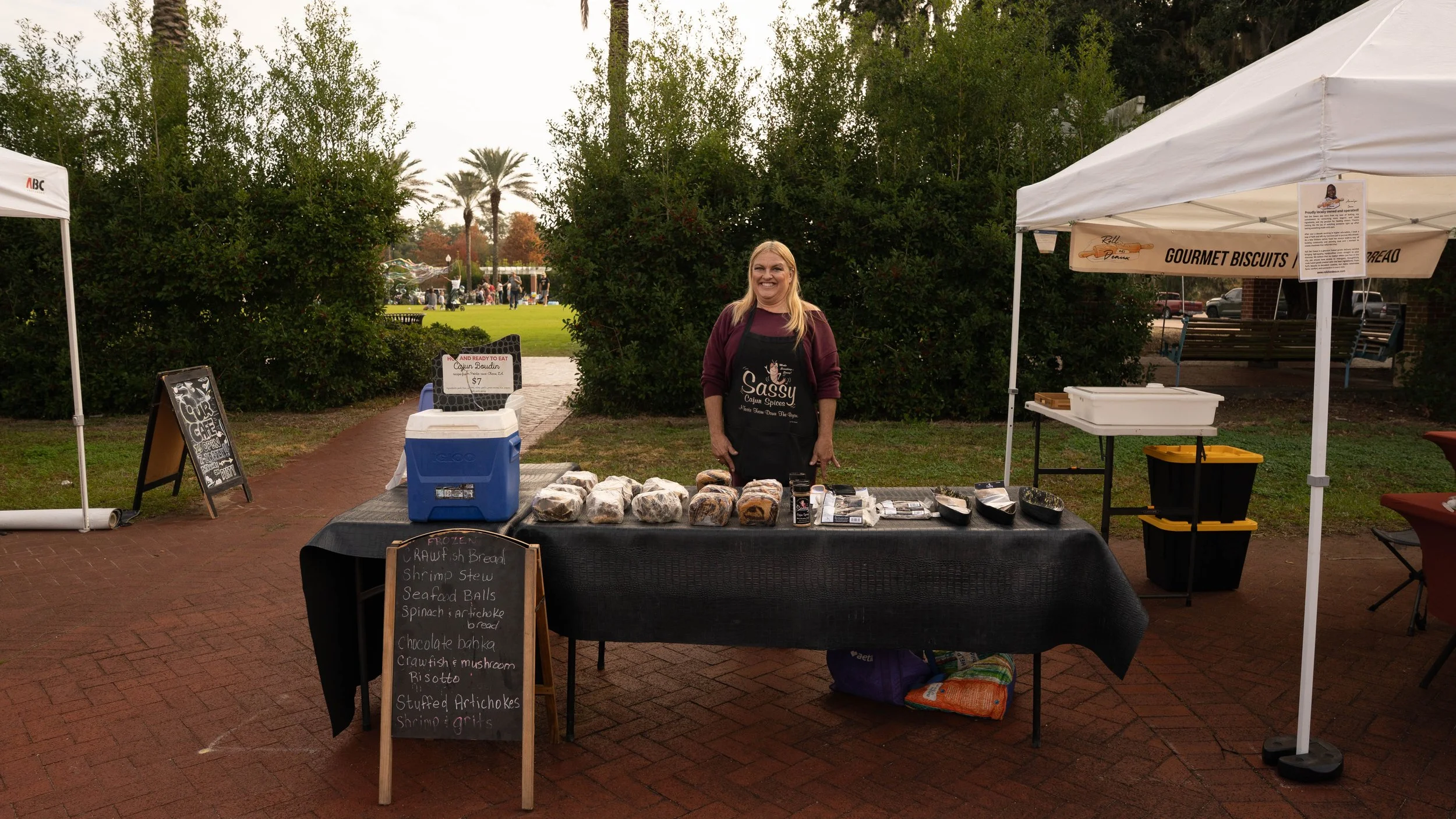
I worked with two fantastic photographers, Abdul Aziz and Fernando Lopez, to document the Gulf Coast Food Traditions at Crescent City Farmers Market for the Southern Foodways Alliance.
Founded in 1995, the Crescent City Farmers Market (CCFM) has grown into far more than a place to buy food—it is a living archive of Gulf Coast life, where agriculture, adaptation, holistic health, sustainable farming, and creativity converge week after week. Stretching from Mississippi to Louisiana, these 11 oral histories reveal how the market is shaped by the people who cultivate, cook, and sell within it. Representing only a small selection of the more than one hundred vendors who have participated over the years, the stories offer an entry point into a community built through food, labor, community, and exchange.
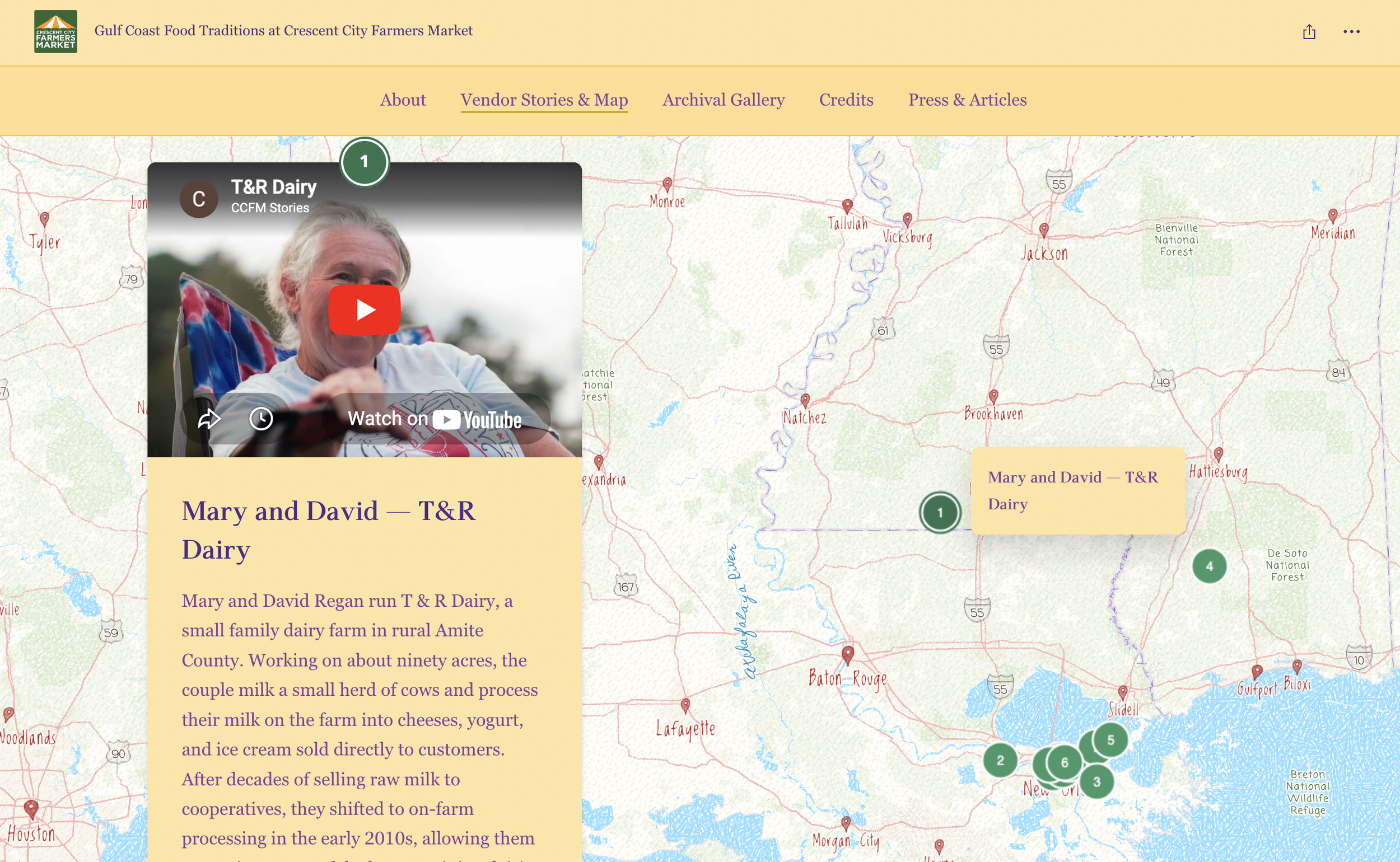
My students at UMBC developed n an ArcGIS story-mapping project about the farmers market vendors which include T&R Dairy, Amanda's Fruit Specialties, Pearl River Pastures, Leo's Bread, River Queen Greens, Petit Jardin, Que Pasta NOLA, Applied Arts Coffee, Sassy Cajun Spices, VEGGI, and Pete and Clara's Seafood. The students developed a bibliography and produced 11 of the videos—what amazing storytellers! You can view the stories here.
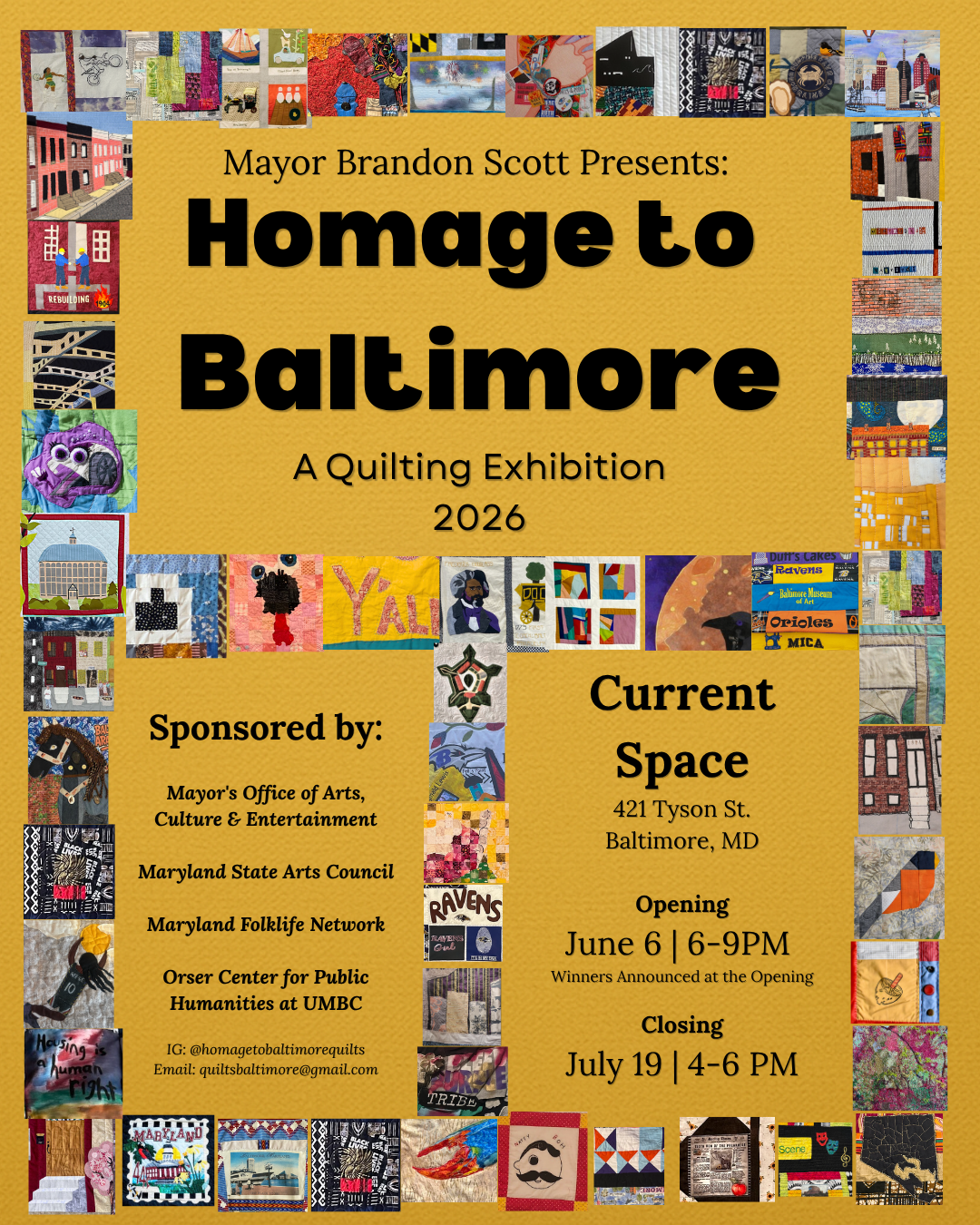
Homage to Baltimore Quilting Exhibition
We received an astounding 52 beautiful entries (each design is featured on the left). The finalists will be displayed at Current Space from June 6 until July 19, 2026. Mark your Calendars!
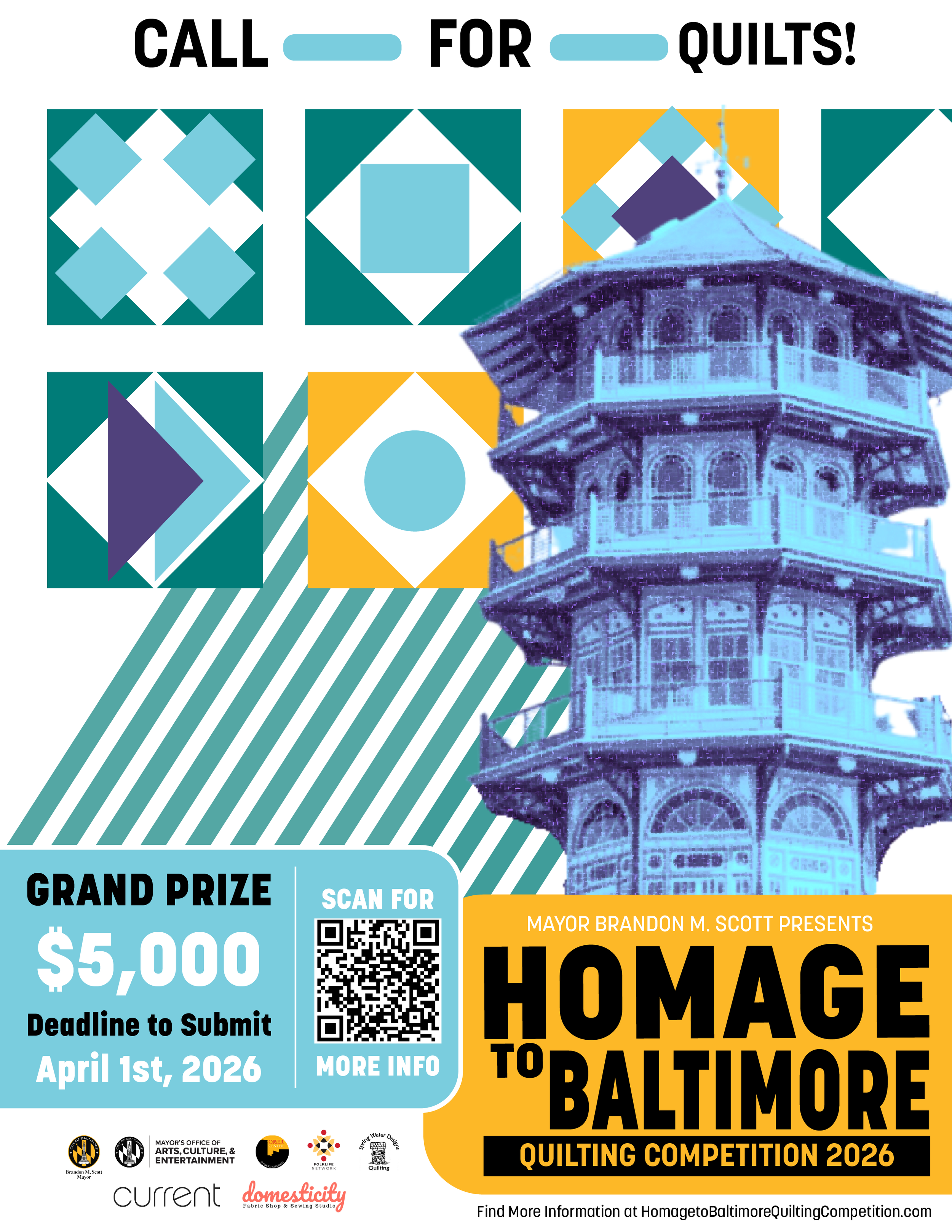
What began as a co-lab UMBC course exploring Baltimore’s quilting history grew into a public project sponsored by the Mayor’s office and Maryland State Arts Council. Building on the legacy of the Baltimore Album Quilt tradition and the city’s 1981 quilt competition, I help lead this project which will culminate into a new exhibition opening June 6, 2026 at Current Space.
Stories of Mera Kitchen Collective
2022-2024
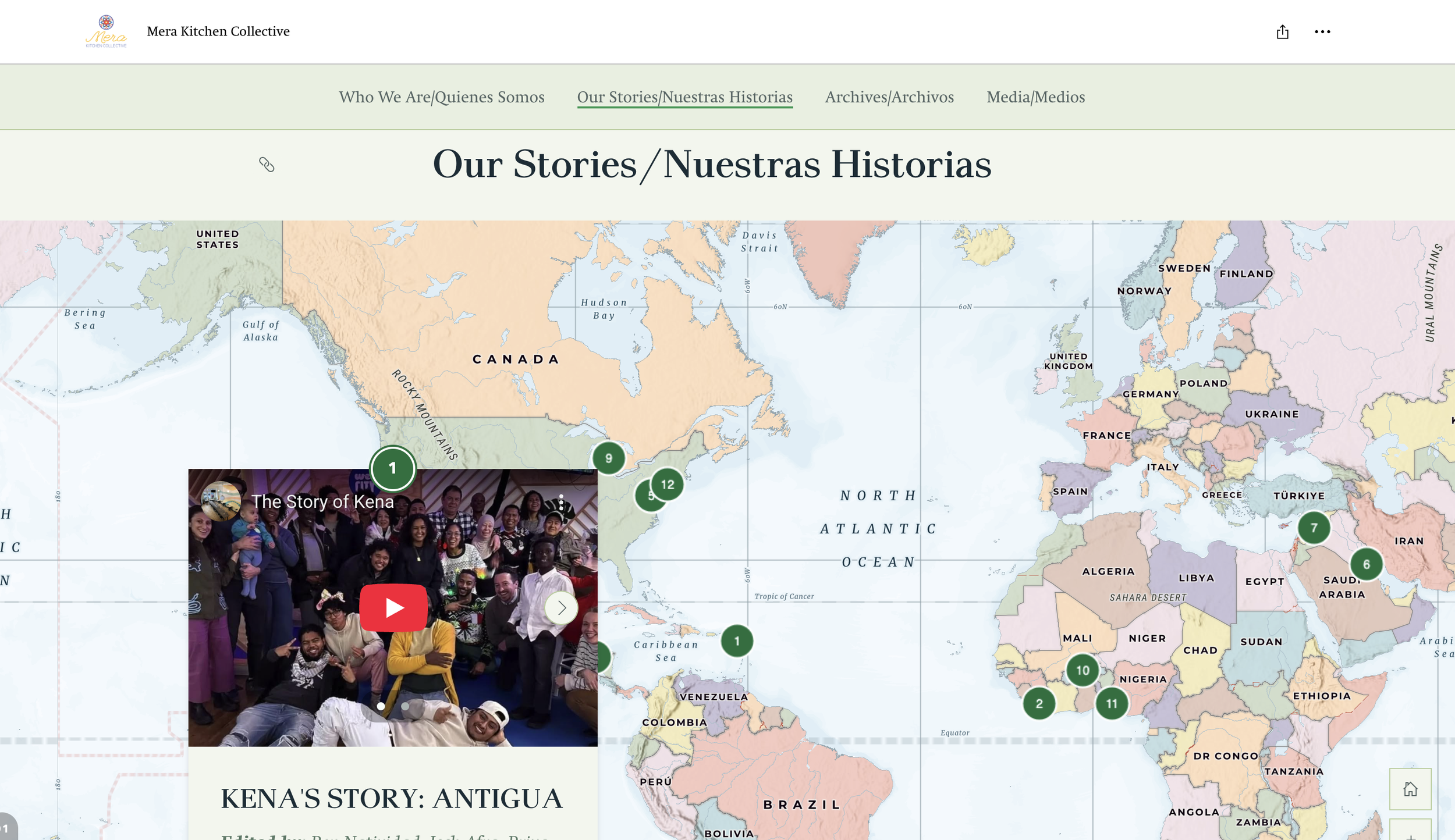
In my AMST357 course, students collaborated with the Mera Kitchen Collective to design a holistic storytelling and mapping project exploring Mera’s history, cultural significance, and impact on the Baltimore community. Supported by funds from the Maryland State Arts Council and the Orser Center for Public Humanities, the project built on collaborative foundations established through Baltimore Field School 2.0 with Aisha Alfadhalah. Using oral histories I conducted with Mera staff, students curated photographs and ephemera, edited audio from the interviews into short narrative clips, and developed a geographic mapping component to highlight the restaurant as an important cultural and community space, reflecting Baltimore’s diversity and the stories behind a locally rooted, worker-led business.
The project emphasized hands-on skill-building in storytelling, audio and photo editing, and digital curation. Students learned to transform long-form interviews into concise, compelling narratives and to curate visual materials to complement the stories. Their work was presented publicly at the 1st Annual Public Stories Lab Mini-Fest, showcasing how community-centered research can engage audiences and center local voices.
All interviews, photos, and ephemera from the project are now archived in the Special Collections at UMBC, preserving this work for future research and teaching. The project culminated in a public launch at Mera on April 22 during “Brazil Night,” featuring Brazilian dishes by visiting scholar Diego Soares Rebouças through the Erasmus program in American Studies. Thanks to the Maryland Folklife Network for support, and to Sasha Solodukhina for the project flyer design.
Link to the storymap is available on Baltimore Traces and on Mera’s website in the “about us” section. Go eat there now!
Sabor De HIghlandtown
2021-2024

What can the stories behind these foods tell us about how neighborhoods change?
Sabor de Highlandtown is a digital humanities project developed in collaboration with my American Studies and Public Humanities students at UMBC between 2021 and 2024. The project was created in partnership with the Southeast Community Development Corporation and the owners of local food establishments across the Highlandtown neighborhood. A central goal of the project was to expand the archival record of Highlandtown, which historically focused on European history, to document the rich stories of immigrant communities whose contributions had long been overlooked. At the same time, Southeast CDC sought marketing support for these neighborhood businesses, and this project offered a meaningful compromise—producing materials that both preserve history and promote local establishments. The collection is hosted in UMBC’s Special Collections as part of the Maryland Folklife Network, and the project is also featured on the I Heart Highlandtown website.
Students engaged in oral histories with food vendors and archival research. Graduate students in the LLC program conducted three interviews, while undergraduates worked in teams to produce 2–3 minute audio clips paired with photographs, highlighting the stories, resilience, and cultural contributions of Highlandtown’s immigrant entrepreneurs. One clip, featuring Jose Vargas, was selected as the basis for a short documentary.
The project was part of my Humanities Scholars course, Introduction to Public Humanities, and two iterations of Food Ethnography, demonstrating how collaborative, community-centered digital humanities work can blend research, storytelling, student skill-building, and community engagement.
Don’t stand alone: black labor organizing in new orleans
2014-2025

Don’t Stand alone: Black Labor Organizing History Exhibition
José Cotto, Max Krochmal, Jana K. Lipman, Mary Niall Mitchell, M. G. Olson; Behind the Scenes: Don’t Stand Alone: Black Labor Organizing in New Orleans. Labor 1 December 2025; 22 (4): 97–109.
The Black-Led Labor History project began in 2015 when Stand members—including Toya Ex Lewis, Alfred Marshall, Colette Tippey, approached me while I was volunteering, asking for help researching and documenting their history. I worked with Tulane students on archival research, trained Stand members to conduct their own oral histories, and took the group to the Amistad Research Center to explore historical materials firsthand. Together, we laid the groundwork for a digital timeline documenting New Orleans’ Black-led labor organizing, which we launched on Juneteenth 2016 with a public teach-in.
From 2019 to 2020, I supervised Tulane and University of New Orleans students remotely as they contributed to the timeline. Despite pandemic setbacks and funding challenges, a dedicated team in New Orleans—including faculty, students, and an advisory committee—took over in 2022, deepening the timeline and preparing the stories for a broader audience.
This work culminated in the “Don’t Stand Alone: Black Labor Organizing” exhibition, which opened in March 2024 at the Small Center. The exhibition showcases the digital timeline and programming developed from 2014–2020. At an April 2024 event, union leader Willie Woods emphasized its importance: “This is what we [the workers] need—to hear and see our own story. Hear we are, look around us. There it is.”
Over time, my role evolved from scholar, teacher, and project manager to supervisor and consultant, allowing new leaders to sustain and grow the project. A talented team—Jana Lipman, Max Krochmal, Molly Mitchell, Erleen Ellis, Jose Cotto, Matt Olson and visual artist Langston Allston—helped design the exhibition and ensure that the history and voices of Black labor organizing in New Orleans are preserved and shared.
El Camino del Pan y el Mole Film Screenings + Programming


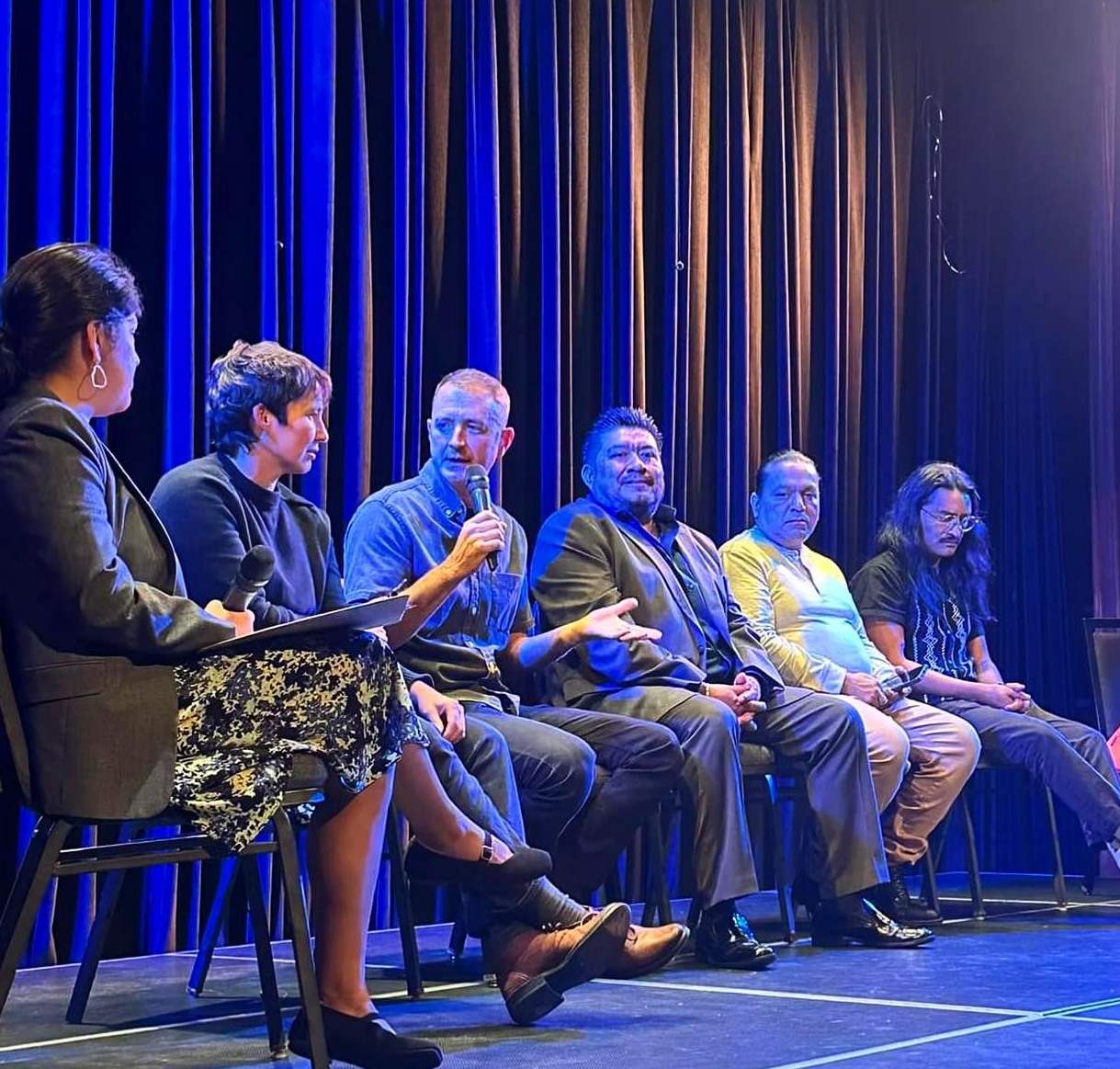


Drag Show, Mariachi, DJ sets, and Films! Check out images from the films screenings and programming at Creative Alliance (November 2023), Maryland Film Fest at Parkview (May 2024), Current Space (June 2024), and flyer for New Orleans Hotel Peter and Paul (July 2024). Black and white photos by Josh Sisk, yellow flyer art by Sasha Solodukhina, and performance photos and crowd shots by Fernando Lopez. Tiny Zines were created by students in my Introduction to Public Humanities course.
El Camino del Pan y el Mole Film series
In 2023, we were invited to be part of the American Folklife Center’s Homegrown Foodways Series to develop two documentary shorts. Working with Baltimore-based, Andy Dahl, and New Orleans-based, Fernando López, we decided to focus the two films on José Vargas (Baltimore) and Ivan Castillo (New Orleans) to chronicle their stories as Mexican restaurateurs. Bringing José’s story in dialogue with Ivan’s story meant bringing Andy together with Fernando to shoot footage for the films in each city. I was already balancing time in both places in between teaching at UMBC and doing fieldwork in New Orleans. We shot footage in March 2023 with Ivan in New Orleans and in April 2023 with José in Baltimore. We entered the field initially thinking we’d link the stories with the Mexican dish, chicken mole. Both Ivan and José had spoken with much sentimentality about their relationship to the dish and the ingredients that define their respective recipes.
But as the Nutria Productions (named for the ubiquitous Louisiana swamp rodent) editing team, which consists of Andy and his partner Marissa O’Guinn Dahl, filtered through the footage, the complex and multifaceted notion of family became more evident as a complement to the Mexican food traditions of both Ivan and José. For José, the idea of family is more traditional, rooted in Huaquechula, Puebla, where he began working in his grandparents’ bakery. For Ivan, the concept of family interrogates these traditional ideas; family, instead, represents his LGBTQ community from Mexico and Central America, who face isolation and social stigma, uniting together through their shared experiences. As we show in the films, Mexican foodways are central to each of these processes.
Check out this interview that Andy and I did for Baltimore Magazine. The El Camino del Pan a Baltimore screened as part of the Maryland Film Festival in May 2024.
Thanks to the Library of Congress, the American Folklife Center, Maryland Folklife Network, and the Deparment of American Studies and the Public Humanities program at UMBC for supporting the project.


Project Neutral Grounds is a Whiting Public Engagement Fellowship project led by Sarah Fouts, Fernando Lopez, and Toya Ex Lewis. The project unites 11 Black and Brown street food vendors to highlight and celebrate their shared passions, brilliance, and struggles. Street food economies are a deep part of New Orleans’s cultural and historical roots and have enabled excluded and exploited working-class people to buildsocial and financial capital through their food. These traditions often align with rich ancestral patterns and histories that have been built from family recipes and ingredients. These vendors' stories are inherent to the city’s cultural events like second lines, Mardi Gras, Jazz Fest and other cultural festivals while also vital to systems of feeding people as part of social movements and in disaster recovery efforts. By documenting these stories that have helped shape New Orleans over the last two decades and longer, we acknowledge the impact of structural oppression, specifically disaster capitalism, in urban settings and make space and offer resources for people to be in conversation across cultural barriers to unite stories of community, adaptation, and mobility. Through food, Project Neutral Grounds intersects with histories of the city’s blending of cultures, of migration, and of how culture is re-formed in the wake of disasters like Katrina while its people find what is needed to have joy, healing, love, and to thrive.
The collaborative project was done with the Southern Food and Beverage Museum and includes 9 cooking demo films, a website, 11 oral histories, photos, a short documentary (see below), and an archive at the Nunez Community College Library. We held two events at the museum in November 2022 and May 2023 to launch the project and film. Each of the vendors provided their food specialities.

Tulane students painting the map of the Americas for the exhibit.
Students in my seminar course, Food, Migration, and Culture, produced oral history audio clips for the "New Orleans Con Sabor Latino" exhibit at the National Food and Beverage Museum in New Orleans. The students conducted interviews with Latinx restaurant owners, chefs, and line cooks. Check out this link with an article featured in NolaVie. Here's the youtube channel featuring the students' work.

A sample slide from the timeline.
I worked on a collaborative project to produce the digital history timeline, Black Workers Organize NOLA, which features a chronology of black worker movements in New Orleans from 1811-present-day. The timeline was created in collaboration with the New Orleans Workers' Center for Racial Justice, Tulane's Center for Public Service, Leon Waters, Harvey Sanders, Colette Tippy, and the members of Stand with Dignity. The official launch of the timeline took place on June 19th, 2016. Students in my Introduction to Latin American Studies course conducted the archival research examining historical New Orleans newspapers. Alfred Marshal, an organizer with Stand with Dignity, conducted the oral history interviews. Special thanks to the Amistad Research Center and the Latin American Library at Tulane University.
SOUTHERN FOODWAYS ALLIANCE: EL SUR LATINO
FEATURING LA PULGA IN NEW ORLEANS

Photograph provided by Fernando Lopez.
Each weekend, an open air Latin market goes unnoticed by tourists -- and most locals-- tucked under an overpass in the Algiers neighborhood, across the river from New Orleans’ French Quarter. Known as La Pulga, the market bustles with reggaeton music blasting from speakers, and vendors sell anything from Lionel Messi soccer jerseys to live chickens. Makeshift booths with basic plywood infrastructure line up along the dirt paths that wind through the labyrinth of individual entrepreneurs.

Photograph provided by Fernando Lopez.
Food vendors set up within the market, offering Latin American specialties like pupusas, esquite, birria, and caldo de mariscos (seafood soups). Fruit stands scattered throughout the market provide freshly squeezed juice -- a reprieve from the heat and humidity while shoppers pass through the packed corridors. In the course of a day’s visit, a family could get back to school supplies, a haircut, and a three-course meal.

Photograph provided by Fernando Lopez.
Fernando Lopez and I conducted documentary field work in the Westbank Pulga and La Pulga in Algiers during the summer of 2017. We highlight the stories of vendors from Mexico, El Salvador, the Dominican Republic, and Honduras to illustrate how these individuals use the markets to forge their own cultural and economic spaces that help make up El Sur Latino.

Photograph provided by Fernando Lopez.