Teaching and Community-Engaged Projects
COURSES
LALS100: Introduction to Latin American and Latino Studies (Tulane)
AMST100: Introduction to American Studies (UMBC)
AMST200: What is an American (UMBC)
AMST300: Research Methods in American Studies (UMBC)
AMST357: Global Americas (UMBC)
AMST376: American Food (UMBC)
AMST490: Food Ethnography in America (UMBC)
AMST498: Co-Lab Baltimore Album Quilts
LAST4650: Food, Culture and Immigration (Tulane)
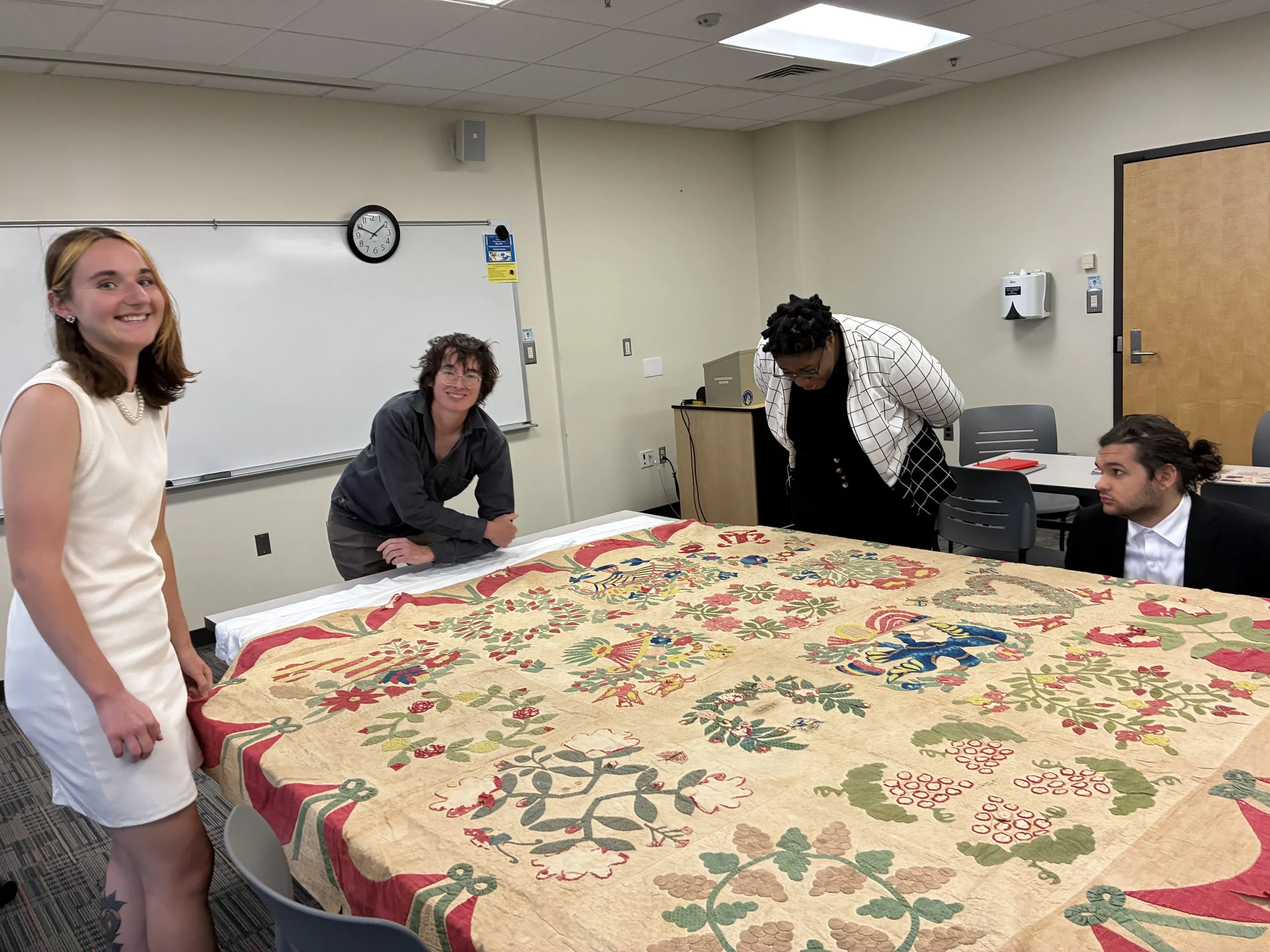
Co-lab course in 2025 with students who worked on the Baltimore Album Quilt project.
________
As an instructor of interdisciplinary courses, I approach teaching by encouraging students to question assumptions and engage with multiple knowledge sources and theoretical frameworks. I emphasize the connection between theory and practice, guiding students to apply concepts from lectures and readings to real-world contexts. Focusing on methodology—whether working with archives, conducting ethnographic fieldwork, or analyzing cultural texts—allows students to gain a firsthand understanding of social, historical, and cultural issues while developing critical problem-solving skills. By grounding theory in applied research and hands-on work, students cultivate critical thinking, strengthen analytical abilities, and see the relevance of concepts beyond the classroom.
I design courses to embed research into teaching, building projects around the work I am actively conducting in the field. Students engage collaboratively in these projects, gaining practical skills while contributing to work that often culminates in public-facing outcomes—digital exhibits, oral histories, multimedia storytelling, and other accessible outputs. This approach enriches their experience, allowing them to see the real-world impact of their labor, while also helping me ask better questions and refine my own research. By centering public engagement and student contributions, the work moves beyond esoteric knowledge production and demonstrates how research can be both rigorous and meaningful for communities.